Wheels wobble when spoke tension becomes uneven throughout the wheel. Truing is the best way to fix this issue. Get all of your spokes back to the same tension so your wheels are properly aligned.
How to True a Bicycle Wheel: Step-by-Step Guide to Fix Wobbles
Written by: Nick Cowie | June 13, 2026 | Time to read: 5 min
For a wheel to be perfect, each spoke needs to be at the exact right tension. Spokes will eventually need adjustments after enough use. Learn how to true your wheel yourself so you can get your smooth function back.

More about the Author: Nick Cowie
Nick is a writer with seven years of experience in the cycling industry. In his free time, he enjoys swimming, Jiu Jitsu, and spending time outdoors.
When your wheels start to jump or wobble, you know something is off. Chances are, it’s a spoke tension issue, and you will need to true your wheel. If you don’t want to go in for a tune-up, it is doable on your own. With a few simple adjustments to the spokes, your wheels can be back to like-new function. Grab your spoke wrench and get started!
👋 Welcome to Upway!
Upway is your top destination for buying and selling e-Bikes online. Discover your next e-Bike at up to 60% off retail prices, available in new or like-new condition.
Table of Contents
What is wheel truing?
Wheel truing is the process of adjusting the tension of the spokes on your bike wheels. These tension adjustments make sure your wheels spin in a straight line and that they are perfectly circular. There are two different types of truing that both need to be done properly for your wheels to spin perfectly.
- Lateral truing: A lateral true is done to keep the wheels rolling in a straight line. This is the type of truing that should be prioritized and done first. Each spoke is either on the right side of the hub, pulling the rim in a given direction. Truing makes sure the spoke tensions on both sides are even. This fixes the side-to-side wobbling feeling by pulling a rim back to the center line.
- Radial Truing: Any issue with up-and-down movement or hopping of your wheel will require radial truing. This is done when the tension is thrown off-kilter, and your wheel is no longer a perfect circle. If you notice an egg-shaped wheel or bumpy ride, you might need to radially true your wheel. If done correctly, the distance from axle to rim will be the exact same in all directions.
Find the problem
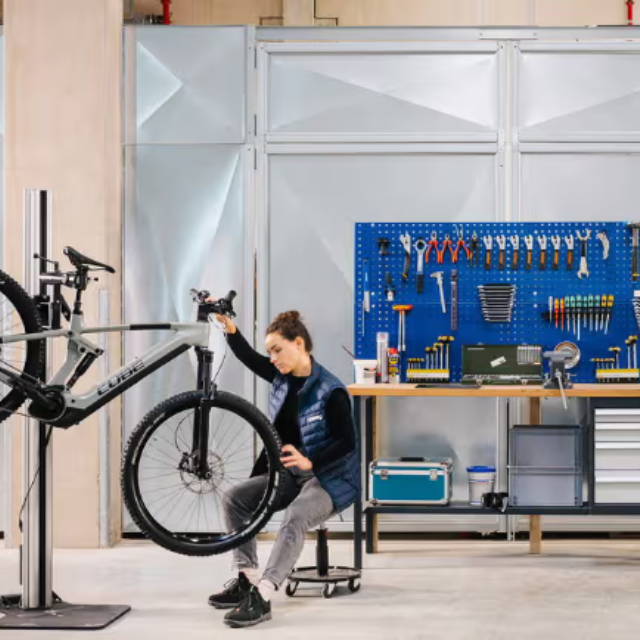
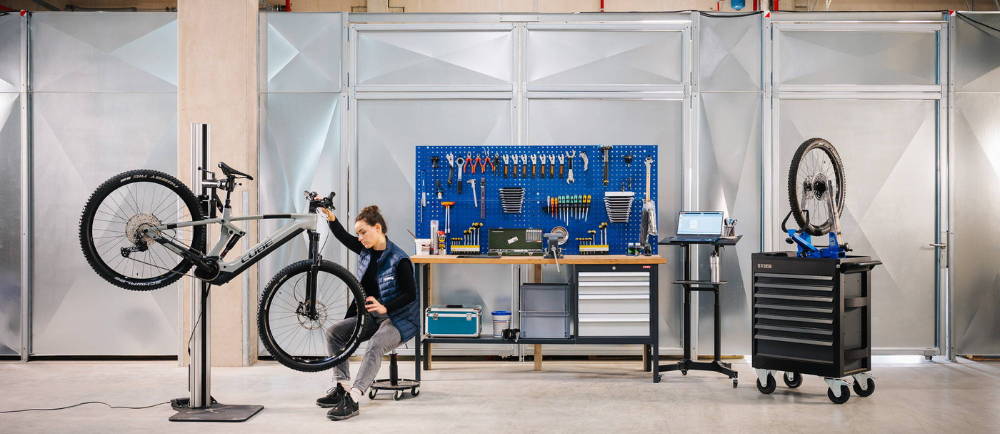
Chances are, you can feel the problem with your wheel, but to fix it, you need to physically locate it and decide how to fix it. To find the wobble, set up your bike, preferably on a bike stand, so the wheel can spin with no interruptions. If you don’t have a wheel truing stand, just flip your bike upside down. Next, set up an indicator, which is typically a zip tie. Place the tie around the fork or chainstay, depending on which wheel you are examining. Get the zip tie as close to the rim as you can without touching it.
Once you’re all set up, it’s time to find the wobble! Note that if you don’t have a zip tie, you can watch the brake pads during this part as an alternative. This works on both rim brake and disc brake bikes. To locate lateral issues, begin to spin the wheel and watch where the rim starts to move closer to the zip tie. Mark on the wheel the starting and ending point of the wobble. For radial issues, mark the area where the wheel hops upward, away from the hub. Once you are confident that you have the full range of the issue, it’s time to fix it.
💸 Want to sell your electric bike?
- In case you didn't know yet, you can sell your e-Bike to Upway and get your cash in 3 simple steps.
- Want an estimation -> It takes only 2 minutes to complete this form
Fix the problem
When you have a targeted problem area, you can begin to true your wheel. Your goal is to even out the spoke tension across the board so the wheel rolls straight with no wobbles or hops. To get the job done, you will need a spoke wrench. It becomes easier to succeed and prevent rim damage if you have a spoke tension meter, but it is not completely necessary.
- Lateral truing:Note which side of your indicator the rim hits when it spins. Find the closest spoke nipple anchored to the opposite side of the side that hits. All you need is a quarter to half turn with your spoke key. If you feel like you are pushing the spoke tension limits, loosen the spokes anchored to the same side of the hub that the rim hits. Start with small turns to avoid rim damage and continue until the rim stays straight. Alloy rims are more likely to bend, while carbon rims can even crack.
- Radial truing: Fixing a radial issue is similar, with some slight changes. Once you identify the radial deviations in relation to the hub, you will have your target spokes. The section where the rim moves inward or outward will be your target area. Try to locate the spoke nipples in the middle of that zone and tighten the same number on each side by a quarter to a half turn. Always check your lateral true again after you complete the radial true.
- Relieve tension: Your wheel will naturally build up tension when its spokes are adjusted. Grab the parallel pair of spokes on each side and squeeze them together. Do this for all of the spokes to relieve spoke tension, then check the truing again to make sure it was not affected.
Frequently Asked Questions
Why are my wheels wobbling?
What tools do I need to true a wheel?
A spoke wrench is the main tool that is actually mandatory for truing a wheel. A truing stand is helpful, as is an indicator like a zip tie, a spoke holder, and a spoke tension meter. A spoke holder is more important if you have bladed spokes.
What does it cost to have a mechanic true my wheels?
Not everyone feels comfortable truing their wheels, but that’s what mechanics are for. Truing typically costs around $30 per wheel, but this will vary depending on the shop and location. If you want to shell out a few more dollars, truing is typically part of a tune-up.
Key Takeaways
- Find the problem when you feel it: When you feel your wheel wobble, it’s best not to procrastinate. The problem will only get worse. Break out the zip tie and find the issue so you can fix it.
- Don’t overtighten: Overtightening spokes can permanently bend the rim and ruin your wheel. Start with small turns of the spoke key to avoid overtightening and making your problem far worse.
- Trust the experts: Not everyone is a mechanic, and truing a wheel might not be for you. If you have a history of doing more harm than good to your bike, bring it into your local bike shop, and they can true it for you. They will have a truing stand and far less risk of rim damage.