They serve different riders. Haibike for mountain biking and mid-range value, R&M for premium everyday use, cargo, and long-range commuting.
Haibike vs Riese & Müller: Which Should You Choose?
Written by: Tom Fortune | May 29, 2026 | Time to read 5 min
Both brands are German. Both use Bosch. But, the differences may surprise you.

More about the Author: Tom Fortune
Tom is a Brit living in the French Alps. When he's not creating written and video content for various brands, he's either pedalling or snowboarding around his local mountains. E-Bikes have unlocked the potential for Tom to explore Alpine terrain and get away from the crowded bike parks. He is only too keen to share his knowledge and experience with other riders.
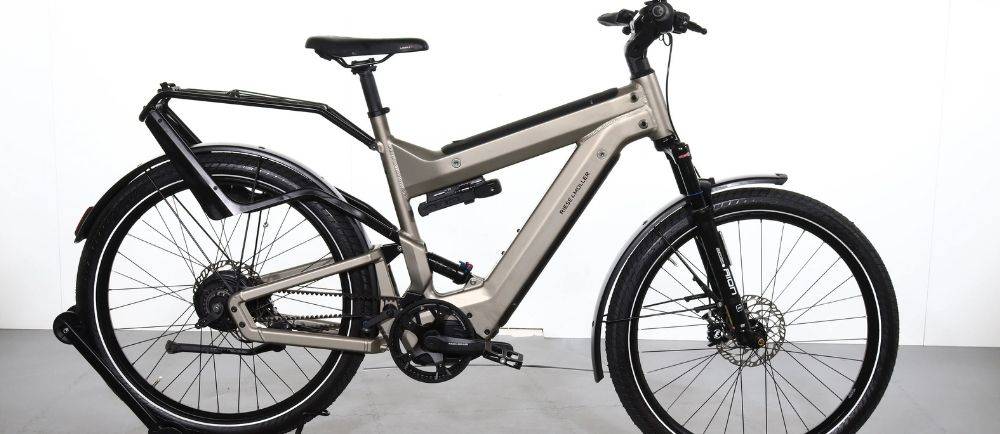
You won’t often find Haibike and Riese & Müller e-Bikes compared with each other, and there’s a reason for that. Haibike is an e-MTB brand. Riese & Müller is a premium everyday mobility brand.
That said, there’s enough crossover in the premium e-Bike space that people do compare them. Probably because they are both German, use Bosch motors, and make bikes that sit at the serious end of the market. If you’re trying to decide between them, the answer usually comes down to where you ride and what you need the bike to do.
👋 Welcome to Upway!
Upway is your top destination for buying and selling e-Bikes online. Discover your next e-Bike at up to 60% off retail prices, available in new or like-new condition.
Haibike vs Riese & Müller: Key Differences
Haibike is the better choice if you want:
- A trail and all-mountain e-MTB from a brand that has been building electric bikes longer than almost anyone.
- A range of motor options beyond standard Bosch, including Yamaha and Pinion.
- Strong mid-range value without paying luxury prices.
Riese & Müller is the better choice if you want:
- A premium everyday e-Bike built to replace a car, not just supplement one.
- Dual-battery capability for seriously long-range on a single charge.
- Up to 12,000 possible configurations, so your bike is built the way you want it.
- A cargo or family bike from one of the best in the business.
Brand Overview
Haibike
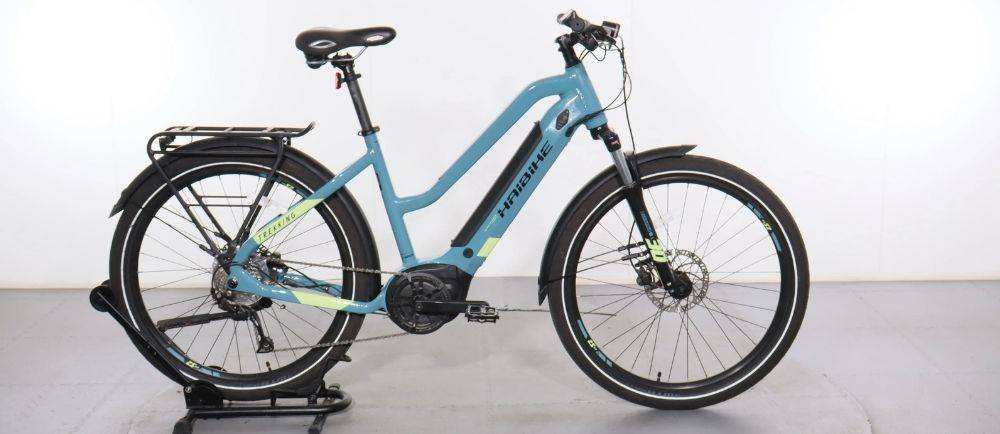
In 2010, Haibike figured out how to mount a Bosch motor in a way that made electric mountain bikes perform well off-road with plenty of ground clearance. Since then, the brand has made nothing but electric bikes. Susanne Puello, one of the cycling industry’s very few female CEOs, has run the brand since 1995.
Riese & Müller
Riese & Müller was founded in 1993 by two mechanical engineering students, Markus Riese and Heiko Müller, whose first product was a pair of earmuffs for cyclists. The Birdy, the folding bike that put them on the map, came out of a cycling trip to Tunisia, where their wheels kept getting stuck in the sand. They went fully electric in 2008 and haven’t looked back.
By 2022, revenues had hit €350 million, up from €76 million in 2018. Still privately owned, still run by the founders, and still assembling every bike to order at their campus in Mühltal. With over 12,000 possible configurations, you can build a bike that fits exactly what you need. The trade-off is lead time. R&M bikes are not something you buy and ride next week. For an even better value than buying brand-new, you can buy certified pre-owned Riese & Müller models from Upway at a huge discount, ready to roll!
Price and Value
Haibike’s prices start at around $3,000 for entry-level trekking models to $6,500 for mid-spec e-MTBs, with top-end carbon e-Bikes being considerably more expensive.
Riese & Müller is in a completely different bracket. The Charger, their more accessible commuter model, starts around $7,000. The Delite and Homage full-suspension models start above $9,000. Cargo models like the Load start at $8,000. These are bikes priced like used cars, and they’re built to be treated like one, so expect them to last a decade or more of daily use.
Certified pre-owned Haibike e-Bikes and Riese & Müller e-Bikes on Upway are both available at up to 60% off retail. For R&M in particular, the used market is often the most practical way to access the brand without the full new price tag.
Motor and Performance
Haibike uses Bosch, Yamaha, and Pinion, depending on the model. Electric mountain bikes get full-power mid-drive motors. The flagship AllMtn CF TRN/IQ goes further, with a Pinion MGU that combines the motor and gearbox into one unit with a belt drive instead of a chain and derailleur. Trekking models use a lower-output Bosch motor suited to everyday riding.
Riese & Müller has long run Bosch throughout its range, though that changed slightly in 2025. Commuter and touring models still use a standard Bosch setup. The Delite4 and Homage4 use the Bosch Performance Line CX, and these remain available alongside the new Delite5 and Homage5, which can now be specced with the Pinion MGU. Speed pedelec HS models go up to 28mph, which makes a real difference on longer commutes.
For mountain biking, Haibike’s motor variety wins. For commuting, touring, and cargo, R&M’s range of motor applications across different riding speeds and styles is hard to beat.
Battery and Range
Haibike’s trail and all-mountain models have large batteries to give you plenty of range for a day on the trails. Some models can take a range extender if you need to ride further. Trekking models use smaller batteries for everyday use.
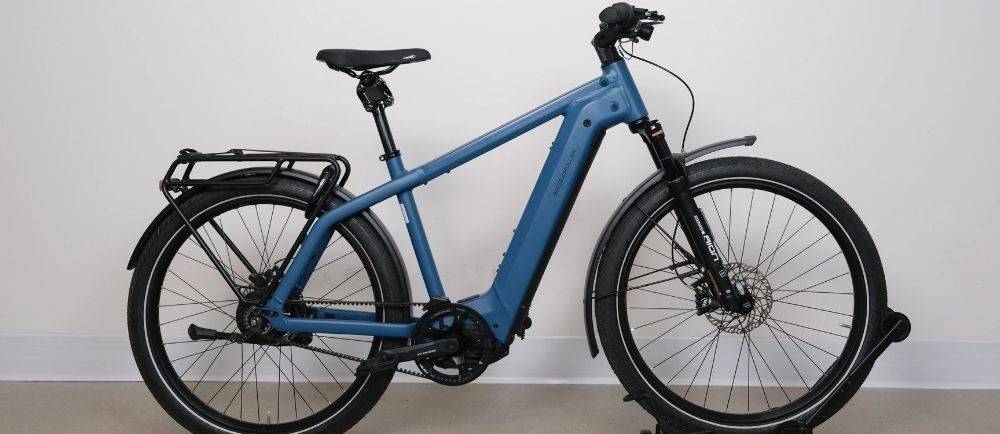
Riese & Müller’s dual-battery system is probably the brand's most distinctive feature. Many models can be configured with two batteries integrated into the frame, giving some bikes up to 1,200Wh of capacity, enough to cover distances that no single-battery e-Bike can match. The Superdelite5 runs 1,200Wh as standard. For serious commuters or touring riders covering long distances who don’t want to think about range, this is a genuinely different proposition.
Ride Quality and Comfort
Haibike’s e-MTBs are built for technical riding. The AllMtn range has geometry that holds its line on demanding terrain. Trekking models put you in an upright position for longer days on varied surfaces.
Riese & Müller designs for comfort over long distances on roads and paths. The Delite and Homage are full suspension bikes for confident riding on everything from city streets to light gravel. The Charger is a hardtail, slightly more nimble and well-suited to urban commuting. The Load and Multicharger cargo models are built with carrying capacity in mind, but still ride well given their purpose. The whole range uses Riese & Müller’s own Control Technology suspension system, tuned specifically for the added weight of a battery and motor.
These are two brands solving different problems. Haibike is about mountain biking capability. R&M is about daily comfort and practicality at a high level.
Design and Features
Haibike trail models connect to the Bosch app for ride mode customization, and the frame designs are clean and well-presented. The AllMtn range keeps things stripped back for performance. The ADVENTR trekking range is the opposite: it includes lights, fenders, a rack, and everything else you need for daily use, all fitted as standard.
Riese & Müller makes their bikes better for daily use with lights, fenders, a rear rack, and an integrated cockpit as standard on most models. Higher-spec bikes get the Nyon display with navigation and connectivity, and some add a built-in lock and GPS anti-theft.
The 12,000 configurations are worth wrapping your head around. Before R&M builds your bike, you pick your drivetrain type, battery size, speed class, display, and accessories. It’s genuinely more like configuring a car than walking into a shop and pointing at something.
If you want to get a sense of the different e-Bike categories before deciding, Upway’s electric bike types guide is worth a read.
Popular Models Compared
Haibike
Riese & Müller
Which Brand Should You Choose?
Go with Haibike if mountain biking is your main thing, or if you want a capable everyday e-Bike without spending five figures. The mid-range value is strong, and the trekking models handle mixed terrain well.
Go with Riese & Müller if you’re serious about replacing a car, hauling cargo, or want to commute on a bike that will last you a decade. The price is high, but so is the quality, and it’s still cheaper than buying and running a car.
Why Buy From Upway?
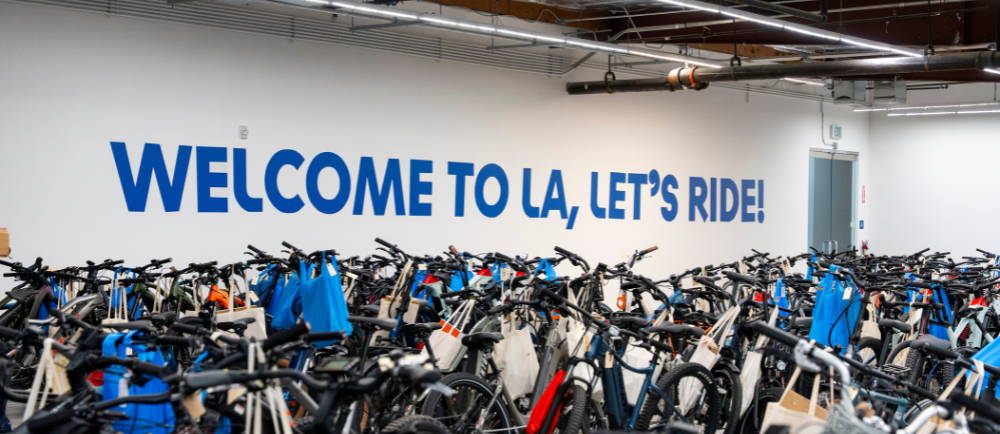
Both brands can be hard to find in stock at a local dealer in the US. Upway stocks certified pre-owned Haibike e-Bikes and Riese & Müller e-Bikes at up to 60% off retail, with every bike undergoing a 50-point inspection before it’s listed. Browse the full electric bike catalog by brand, category, and budget, and have it delivered fully assembled.
Every purchase comes with a one-year warranty and a 14-day return window. Check out Upway’s guide to buying a used electric bike, especially if you’re considering a used R&M.
Frequently Asked Questions
Is Haibike better than Riese & Müller?
Does Haibike make anything other than e-MTBs?
Yes, the ADVENTR and Trekking ranges cover mixed-surface commuting and longer touring rides.
Does Riese & Müller make trail bikes?
The Delite and Superdelite handle light trail use, but R&M is primarily for everyday mobility, not mountain biking.
What makes Riese & Müller so expensive?
Made-to-order production, premium components, dual battery options, full suspension on most models, and a fit-and-finish closer to a car than a bike.
Can I buy Haibike and Riese & Müller on Upway?
Yes, Upway carries certified pre-owned models from both brands at up to 60% off retail, with a 50-point inspection and one-year warranty.
Key Takeaways
- Haibike invented the e-MTB in 2010 and offers mid-range e-Bikes for mountain biking and trekking, with motor options from Bosch, Yamaha, and Pinion.
- Riese & Müller has been making premium everyday e-Bikes since 2008, with dual battery technology, 12,000 possible configurations, and prices that reflect the quality.
- These brands solve different problems: Haibike for mountain biking and value, R&M for daily mobility, cargo, and long-range riding at the premium end.