Only in limited circumstances. Electric bikes are generally prohibited on sidewalks in business districts and are not permitted on sidewalks anywhere in the city after dark.
San Francisco E-Bike Laws and Regulations (2026)
Written by: Kazim Ladimeji | May 31, 2026 | Time to read 6 min
If you ride an electric bike in San Francisco, it’s important to understand both California state e-Bike laws and San Francisco’s local ordinances. From sidewalk riding restrictions and bike lane rules to stricter battery safety standards, these regulations directly affect where and how you can legally ride throughout the city.

More about the Author: Kazim Ladimeji
Kazim is a UK-based cyclist and writer who discovered his passion for riding during lockdown six years ago and hasn’t looked back since. He now rides around 100 miles a week, exploring road and light gravel routes from his base in the Cotswolds, a cycling paradise. When he’s not riding or writing about e-Bike trails in the US, he’s exploring cafés, cooking, and keeping busy as a soccer dad

San Francisco has become one of California’s most popular cities for electric bike commuting and urban transportation thanks to its excellent cycling infrastructure.
California follows a statewide three-class electric bike system, but San Francisco also enforces additional local ordinances around sidewalks, public roads, and battery safety. Riders, therefore, need to understand both California state law and the extra local restrictions that apply specifically within San Francisco City.
In this article, I summarize the key San Francisco City and California e-Bike laws and regulations in a practical and easy-to-understand way, so you can stay compliant and ride safely.
👋 Welcome to Upway!
Upway is your top destination for buying and selling e-Bikes online. Discover your next e-Bike at up to 60% off retail prices, available in new or like-new condition.
Table of Contents
What are the California State e-Bike laws that apply in San Francisco?
What are San Francisco’s local ordinances around e-Bike usage?
Where can you ride electric bicycles in San Francisco?
Can electric bikes be ridden on sidewalks in San Francisco?
Does San Francisco have rules on safe riding on roads?
What are San Francisco’s local ordinances on e-Bike batteries?
Frequently Asked Questions
What are the California State e-Bike laws that apply in San Francisco?
California uses a statewide three-class system to regulate electric bicycles, and these rules also apply throughout San Francisco. To legally qualify as an e-Bike under California law, the bicycle must have working pedals and an electric motor producing no more than 750 watts of power.
California separates electric bicycles into the following classifications:
California also prohibits tampering with an electric bicycle’s factory speed restrictions unless the classification label is updated to reflect the modification. Once an e-Bike exceeds legal speed or power thresholds, it may no longer qualify as a legal electric bicycle under state law.
E-Bikes vs e-motorcycles
Under California law, electric bikes capable of travelling faster than 28 mph with pedal assist, faster than 20 mph using throttle-only power, or producing more than 750 watts are generally treated as e-motos or electric motorcycles rather than legal e-Bikes.
These higher-powered electric vehicles may require registration, insurance, licensing, and additional compliance requirements before they can legally be ridden on public roads.
Due to a rise in accidents involving powerful electric motorcycles marketed as e-Bikes, California has significantly tightened enforcement around motor wattage, top assisted speeds, and battery safety standards.
E-Bikes vs standard bicycles
In California, electric bicycles are usually allowed anywhere standard bicycles are permitted, including roads, bike lanes, urban cycling infrastructure, beachfront paths, and many shared-use bike routes unless restricted by local ordinance or posted signage.
Trail access often depends on the class of e-Bike being used. Class 1 e-Bikes typically enjoy the broadest access, while Class 3 electric bikes tend to face greater restrictions on shared paths and recreational trails.
Electric bicycles are not permitted on freeways or expressways.
Safety laws for electric bicycles in California
California also imposes statewide safety requirements covering helmets, lighting, brakes, rider age restrictions, and battery certification standards.
All riders under 18 must wear a helmet, while helmet use is mandatory for every Class 3 e-Bike rider regardless of age.
Electric bikes ridden at night must be fitted with approved front and rear lighting along with reflectors.
From January 2026, all e-Bike batteries sold in California must be tested and certified by an approved laboratory such as UL and display permanent certification markings.
What are San Francisco’s local ordinances around e-Bike usage?
San Francisco mostly follows California State laws on electric bicycles (summarized above) and has some local ordinances and laws that electric bikes must follow in the city.
Where can you ride electric bicycles in San Francisco?
Under California law and local ordinances, electric bicycles can be ridden anywhere that traditional bicycles can be ridden in San Francisco, including public roadways, bike lanes, greenways, bike paths, and shared spaces.
There may be local restrictions on Class 3 e-Bikes due to their higher speeds, and localized speed limits are increasingly being introduced on bike paths. Always check local signage before using bicycle paths.
There may be local restrictions on Class 3 e-Bikes due to their higher speeds, and localized speed limits are increasingly being introduced on bike paths. Always check local signage before using bicycle paths.
Can electric bikes be ridden on sidewalks in San Francisco?
In addition to state laws against tampering with e-Bike governance systems, San Francisco has introduced its own local ordinance on sidewalk access.
Electric bikes are not allowed:
- On any sidewalk in any business district within the City
- On any sidewalk within the City between the period commencing ½-hour after sunset and ½-hour before sunrise
I infer from this that bikes are allowed on sidewalks in quieter uptown and residential areas. However, it would seem that electric bikes are not allowed on any sidewalk after dark.
Common sense dictates that if available, dedicated bike lanes should be used in preference to sidewalks even at times or areas where it may be permitted, but this is down to rider choice and not law.
Does San Francisco have rules on safe riding on roads?
Yes, San Francisco’s municipal code incorporates the California Vehicle Code, and the city has outlined safe riding guidelines. Riders must:
- Yield the right of way to pedestrians crossing the street, along with cyclists and cars
- Yield the right of way to pedestrians approaching from sidewalks or crosswalks
- Always travel in the same direction as traffic
- Not carry objects that obstruct or impair vision
- Not operate the e-Bike recklessly in a way that endangers people or property
- Not wear headphones, headsets, or earplugs while riding
What are San Francisco’s local ordinances on e-Bike batteries?
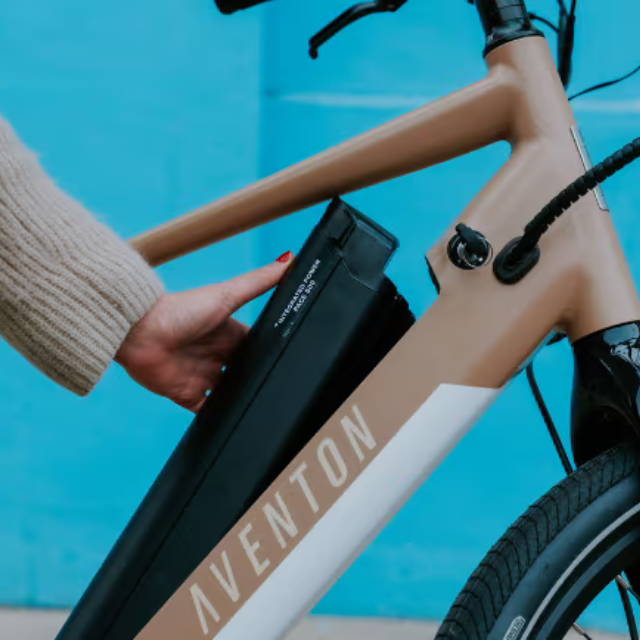
San Francisco follows California state rules on e-Bike batteries, but has introduced additionallocal fire safety regulations due to a rise in lithium-ion battery fires, one of which led to 130 people being displaced from a multiple-occupancy building.
From March 2024, all e-Bike batteries in San Francisco must meet one of the following certification standards:
- UL 2849 or UL 2272
- EN 15194 or EN 17128
- Another accredited laboratory standard approved by the San Francisco Fire Department.
Additional San Francisco battery safety rules include:
- Up to four Personal Mobility Devices (PMDs) may be stored and charged in a dwelling unit if safety-certified
- Charging more than five PMDs requires extra fire suppression systems such as sprinklers, a smoke detection system and 3 feet spacing between PMD’s when charging.
- Batteries and chargers must be plugged directly into wall outlets; extension leads and power cords are not permitted.
- PMDs must be charged according to the manufacturer’s standards using the original chargers and batteries.
- PMD batteries that are dropped, cracked, or involved in an accident must be self-inspected for damage. Damaged batteries cannot be used
- Reconditioned lithium-ion batteries are prohibited
- Lithium-ion batteries must not be disposed of in landfill, recycling and compost bins; they must be recycled through one of San Francisco’s approved battery recycling programs
- Following a major lithium-ion battery fire in late 2025, San Francisco is also considering stricter legislation banning the sale of uncertified batteries and powered devices, with proposed fines up to $1,000.
Frequently Asked Questions
Can I ride my electric bike on sidewalks in San Francisco?
What battery standards apply to electric bikes in San Francisco?
San Francisco requires certified lithium-ion batteries meeting UL or equivalent approved standards due to local fire safety concerns.
Can I wear headphones while riding an electric bike in San Francisco?
No. San Francisco’s local ordinance prohibits riders from wearing headphones, headsets, or earplugs while operating an e-Bike.
Key Takeaways
- San Francisco follows California’s statewide three-class e-Bike system.
- Sidewalk riding is heavily restricted in San Francisco business districts and prohibited after dark.
- San Francisco has stricter local battery safety regulations than many California cities.