Yes, in their default Class 2 setting. Off-Road or Unlimited Mode is not legal for street or bike path use anywhere in the US.
Are Super73 Bikes Legal Electric Bikes?
Written by: Tom Fortune | July 23, 2026 | Time to read 5 min
Super73 bikes look like small motorcycles, and that resemblance is intentional. What counts as a legally recognized bicycle versus something else comes down entirely to which mode it’s running in.

More about the Author: Tom Fortune
Tom is a Brit living in the French Alps. When he's not creating written and video content for various brands, he's either pedalling or snowboarding around his local mountains. E-Bikes have unlocked the potential for Tom to explore Alpine terrain and get away from the crowded bike parks. He is only too keen to share his knowledge and experience with other riders.
The short answer is yes, as long as they are in their default setting. However, the longer answer involves a mode most owners eventually discover, a documented lawsuit, and a rule change that took effect in January 2025. Here’s everything you need to know, and it’s worth understanding e-Bike regulations more broadly before assuming any switchable-mode e-Bike is street-legal in every setting.
👋 Welcome to Upway!
Upway is your top destination for buying and selling e-Bikes online. Discover your next e-Bike at up to 60% off retail prices, available in new or like-new condition.
The Three-Class System, Explained
Most US states sort electric bikes into three categories:
- Class 1 has a limited top speed of 20 mph and only assists while you’re pedaling, with no throttle.
- Class 2 also caps at 20 mph but has a throttle that allows the bike to move without pedaling.
- Class 3 raises the pedal-assist limit to 28 mph, without a throttle, and often is subject to additional restrictions.
To qualify as an e-Bike instead of a motor vehicle in most states, including California, the motor also can’t exceed 750 watts of continuous power. If your e-Bike is more powerful than that, or exceeds the speed limits tied to each class, it stops being legally treated as a bicycle.
How Super73 Fits Into the Classes
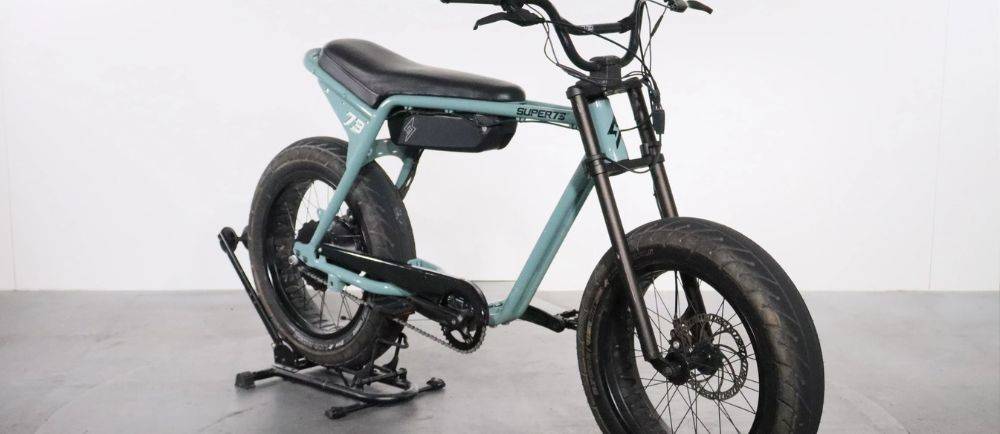
Every current Super73 model, including the R-series and the S2, comes in Class 2 mode by default. That keeps them within the 750W and 20 mph limits that define a legal e-Bike in most places, and it’s the setting under which the bikes are sold and marketed.
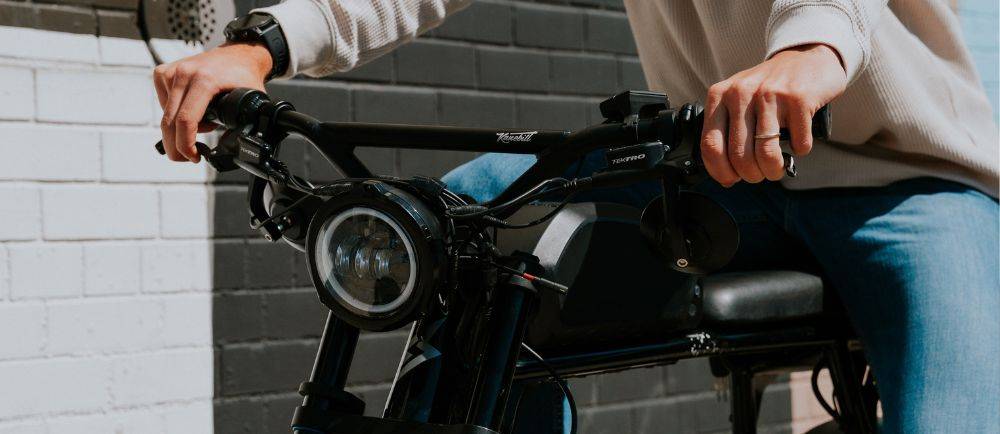
Super73 e-Bikes, is that they look a bit like e-moto bikes, due to their cruiser/motorcycle aesthetics. This means their appearance can confuse people to what they actually are.
The thing is, Super73 bikes can switch classes. Using the Super73 app, a rider can move between Class 1, Class 2, and Class 3, still within standard e-Bike limits, or open up a fourth setting that doesn’t fit into any class at all.
Off-Road Mode and Why It’s Different
That fourth setting is usually called Off-Road Mode or Unlimited Mode, and it removes the restrictions that keep the other three settings street-legal. It allows up to 2,000 watts of peak power and speeds well past 28 mph, closer to what a small motorcycle produces than what any e-Bike class permits.
Super73 has always described Off-Road Mode as intended for private land, not public roads. In practice, plenty of owners have used it on streets and bike paths, which is exactly what drew legal attention.
The California Lawsuit and the 2025 Rule Change
In December 2024, a California resident filed a lawsuit against Super73, alleging that their e-Bikes were capable of exceeding legal speed limits while being marketed as street-legal. The suit claimed law enforcement had repeatedly clocked Super73 models at 35 to 38 mph, speeds achievable only in the unlocked Off-Road Mode. This meant that the bikes were closer to unregistered motor vehicles than to legal e-Bikes under California law.
A new California law took effect around the same time, making it illegal to sell e-Bikes that can switch between classes, and redefining Class 1 and Class 3 as categories in which throttles are explicitly prohibited. In response, Super73 changed how its app works. Anyone who downloads and pairs the app for the first time after January 1, 2025, can no longer access anything beyond Class 2 mode, the setting the bike comes in. Units paired before that date may still retain access to the other modes, depending on when they were set up.
Age, Helmet, and State-by-State Differences
E-Bike rules vary widely by state and sometimes by city, so you should always check your local regulations directly before you ride. You’ll find that some states set minimum ages for Class 3 e-Bikes. This is typically 16, and riders must wear a helmet regardless of age. Others restrict where Class 3 bikes can be ridden, keeping them off certain bike paths or trails where Class 1 and Class 2 bikes are permitted.
Off-Road or Unlimited Mode isn’t legal for public road or bike path use in any state, since it exceeds the power and speed limits that define an e-bike everywhere in the country, not just California.
What This Means If You’re Buying a Super73
A Super73 in its default Class 2 setting is a legal e-Bike almost everywhere in the US, no license, registration, or insurance required. That covers the vast majority of how these bikes get ridden day to day.
If you’re buying a used Super73, it’s worth checking when the app was first paired to the bike. Units set up before January 2025 may still have access to Class 1, Class 3, and Off-Road Mode, while anything paired after that date will be locked to Class 2 only. Neither situation makes the bike itself illegal to own, since the legality comes down to which mode you’re riding in, not which modes are technically available.
Find a Legal Electric Bike on Upway
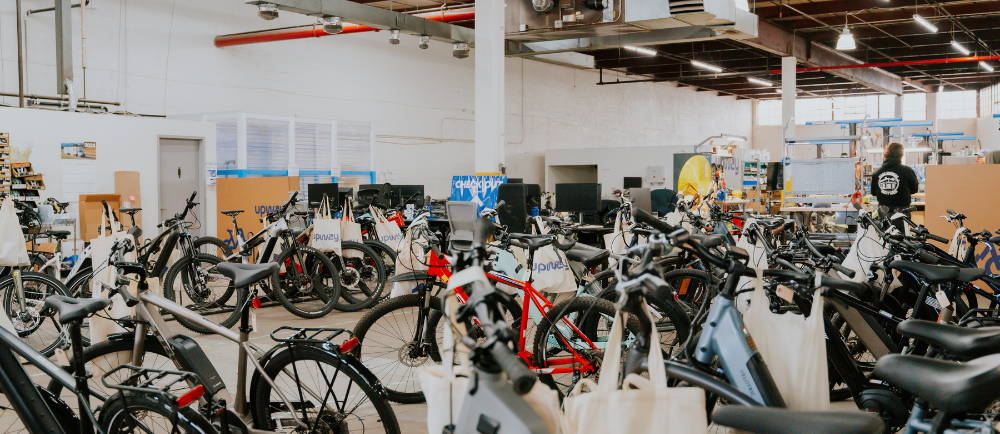
Every e-Bike listed on Upway is inspected before it’s cleared for sale, including checking its setup the way it’s meant to be ridden. A one-year warranty covers the frame, motor, and electrical system, and a 14-day return window gives you time to make sure a bike fits before committing.
Browse the current Super73 selection on Upway, or check out the wider range of Class 2 and Class 3 e-Bikes to compare your options.
Frequently Asked Questions
Are Super73 bikes legal to ride on the street?
What happened with the Super73 lawsuit?
A California resident filed a class-action lawsuit in December 2024, alleging Super73 sold e-bikes capable of exceeding legal speed limits while marketing them as street-legal. Super73 has since restricted app access to Class 2 mode only for anyone pairing the app after January 1, 2025.
Can I still access Class 3 or Off-Road Mode on a used Super73?
It depends on when the app was first paired to that specific bike. Units paired before January 2025 may retain access to the other modes, while anything paired after that date is limited to Class 2.
Key Takeaways
- Super73 bikes are legal e-bikes in their default Class 2 setting, but they’re also built to unlock a fourth mode that exceeds standard e-bike power and speed limits entirely.
- A December 2024 lawsuit and a subsequent California law led Super73 to lock new app pairings to Class 2 only starting January 1, 2025.
- Upway’s certified pre-owned e-Bikes go through a full inspection before listing, backed by a one-year warranty and a 14-day return window.